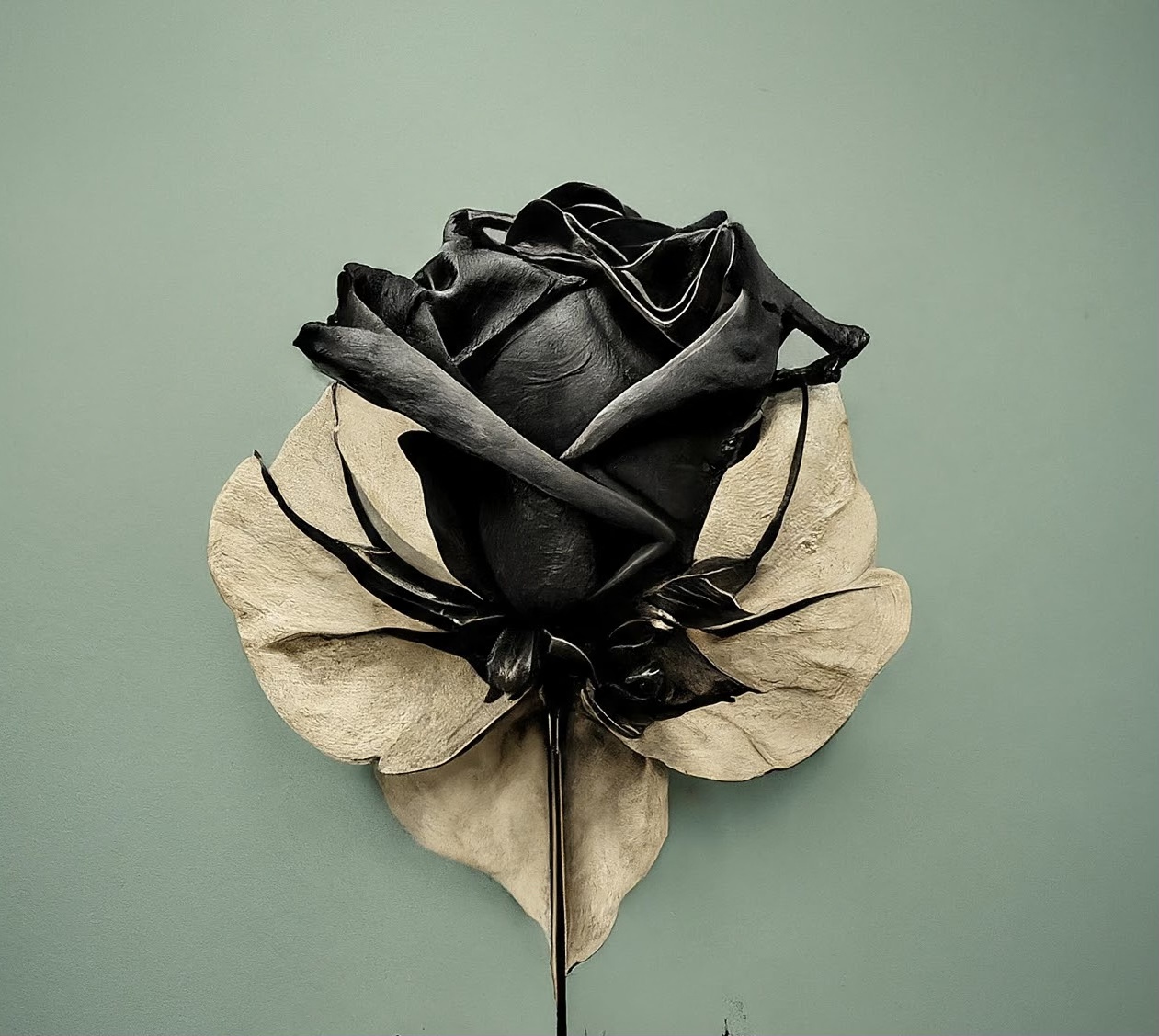
And How It Shaped So Heavy, I Fell
I was diagnosed with bipolar disorder
in 2023.
But the story began long before that.
For years,
I lived in extremes—
soaring highs that made me feel unstoppable,
followed by crashes
so heavy
they swallowed me whole.
I thought it was just how I was.
Just how life was.
A personality,
not a pattern.
A storm,
not a cycle.
But the diagnosis changed everything.
Suddenly,
there was a name
for the chaos I’d been carrying.
A frame
for the whirlwind
that had defined my world.
It was clarity—
and a reckoning.
I had spent so long
trying to make sense of myself
through writing,
and now—
the pieces of my poetry
finally aligned.
They finally spoke back.
When I began writing So Heavy, I Fell: A Journey Through Wanderland,
I wasn’t crafting a narrative.
I was writing to survive.
Each poem
was a breath,
a release,
a way to say what I couldn’t speak aloud.
But then I stepped back,
and saw the whole.
This wasn’t just emotion on the page.
It was a story.
My story.
Without trying,
I had followed the arc
of descent and rising:
the fall into darkness,
the chaos of losing control,
the crash,
and the slow,
aching,
beautiful climb
toward light.
But it wasn’t linear.
It spiraled.
It blurred.
It mirrored the mind
of someone
living with bipolar disorder.
That’s when I realized—
Poetry wasn’t just how I expressed myself.
It was the only way I could tell this story.
How Bipolar Disorder Shaped the Narrative
Most stories move in lines:
beginning,
middle,
climax,
end.
But bipolar doesn’t move in lines.
It cycles.
It loops.
It breaks the frame.
Then builds a new one.
So Heavy, I Fell
didn’t follow one arc.
It followed many—
each one echoing a part of my lived experience.
1. The Descent — Before the Fall
Every story begins somewhere.
Mine began with weight.
These poems are quiet.
Aching.
Full of the slow suffocation
of unspoken struggle.
This is what depression feels like:
a heaviness with no name.
An exhaustion that never lifts.
A fading of self—
like living behind a veil.
The speaker is restless.
On the edge of something unnamed.
She doesn’t yet see the fall.
2. The Collapse — Spiraling into Chaos
Then—
the fall.
In a novel, this would be tension rising.
Here,
the form begins to fracture.
The poems get faster.
The rhythm breaks.
Thoughts loop.
Lines twist.
Some pieces are euphoric.
Untouchable.
Others spiral between confidence and fear,
desire and detachment.
This is what mania feels like:
a storm
that swears
it’s the sun.
3. The Breaking Point — The Crash
And then—
the reckoning.
Not a single climax.
But a slow,
fragmented
unraveling.
The realization
that the highs were never real.
The silence
after the roar.
The weight
of falling
from something that felt infinite.
These poems are bare.
No masks.
No illusions.
Only me—
left with the wreckage of myself.
This was the hardest part to write.
Because it wasn’t just poetry.
It was memory.
4. The Reckoning — Sifting Through the Ashes
What comes next?
In fiction, this is the aftermath.
But healing isn’t neat.
It stutters.
Backtracks.
Sings,
then goes silent.
Here,
the poems reach toward peace—
but not always.
Some resist.
Some rest.
Some rage.
Some whisper.
This isn’t resolution.
It’s realization.
The first flicker
that healing might be possible.
5. The Ascent — Reclaiming My Story
This final section
isn’t about closure.
It’s about becoming.
These poems don’t forget.
They integrate.
The speaker—me—
is still scarred.
Still tender.
But no longer drowning.
The tone softens.
The pace slows.
The words exhale.
This is where transformation begins.
Why Poetry Was the Only Way
I could’ve written a memoir—
chaptered,
clean,
chronological.
But that wouldn’t have felt true.
Not to how I lived it.
Because bipolar disorder doesn’t move
by chapter.
It spirals.
It rips and rebuilds.
It dances between clarity
and confusion.
Poetry made room
for contradiction.
For silence.
For breath.
For the line
that says more
than a paragraph ever could.
It let extremes live side by side.
It let the healing be
nonlinear,
imperfect,
real.
It held space
for what wasn’t said.
A Story Told in Verse
I didn’t set out
to write a novel in poems.
But now I see—
that’s exactly what I did.
It’s the story of falling,
and rising.
Of breaking,
and rebuilding.
Of being swept under—
and learning how to breathe again.
That’s the power of poetry.
It doesn’t just document your life.
It transforms it.
It takes what once silenced you
and turns it into something that speaks—
Truthfully.
Powerfully.
Without apology.
Just like any story worth telling.
 J.N. Rose